Welcome back to the design veterans who have been with me from Day 1, and thanks for joining in on the fun to all the new artists who just discovered this project. All of the support is much appreciated! Let’s get into today’s article.
Our peripheral vision picks up a lot of information before we even have time to consider what the image is about. This is a result of our eyes and mind scanning…constantly (not scanning as they say in this BLOG because they don’t include the peripheral vision which doesn’t require eye movement.) We subconsciously follow a natural line of continuation before we realize it’s a design element leading us. We see big blocks of color as one object before we take time to find out if there is detail within it (I’m not a scientist or an eye doctor, this can all be seen by simply looking). Since we naturally assume these things…easily figure out the puzzle, unlock the door in a split second, this can potentially take away from the interest of the image and lean on the verge of boring. Someone can glance at the frame of a painting, not the painting itself, and easily decipher if the painting has a sky full of beautifully designed clouds, or boring blue emptiness. Knowing how the eye scans can help you anticipate the way the viewer will look at an image and allow you to incorporate design techniques to keep them intrigued. To hook them, then reel them in.
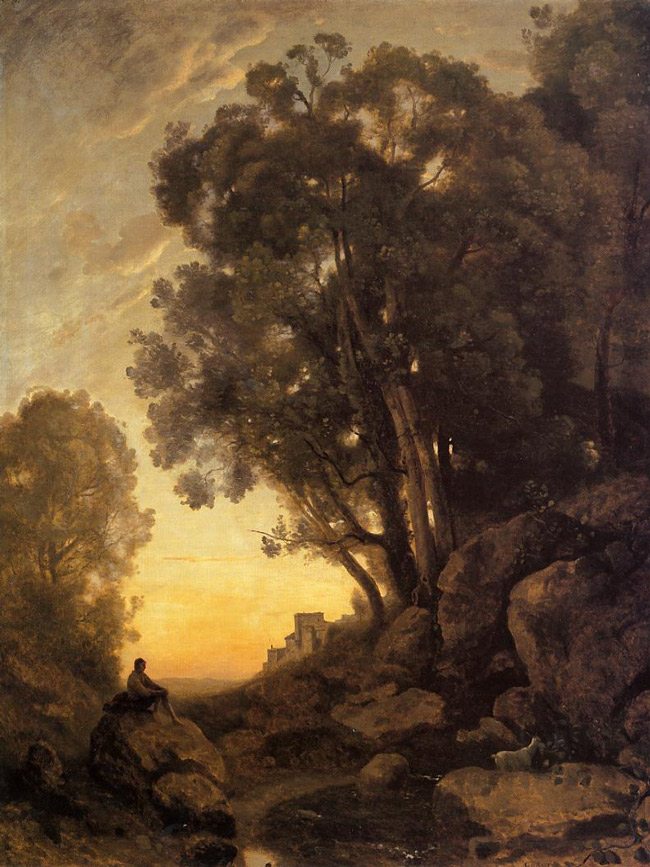
I’ll be using several paintings by Corot to demonstrate how he understands design and takes control of his canvas in order to better control the viewers eyes.
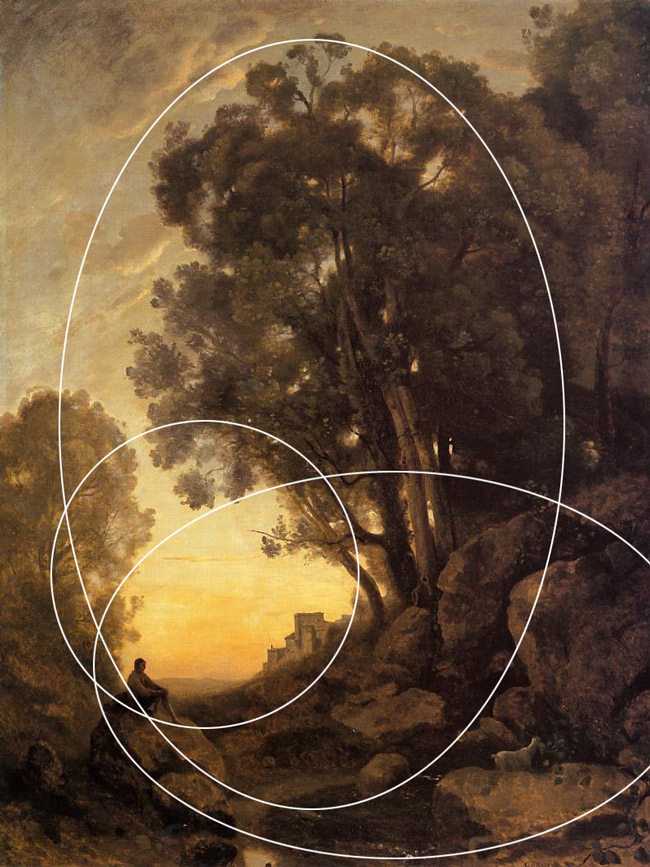
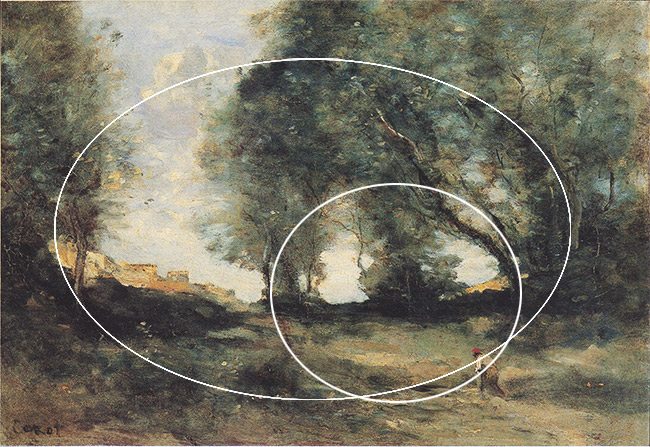
Here we can see how he hides ellipses within his painting. These not only tie in the foreground with the background, but it adds more interest to the painting which silently speaks to the viewer. We enjoy these hidden gifts even though we can’t point them out because our scanning eyes and peripheral vision follows them with ease.
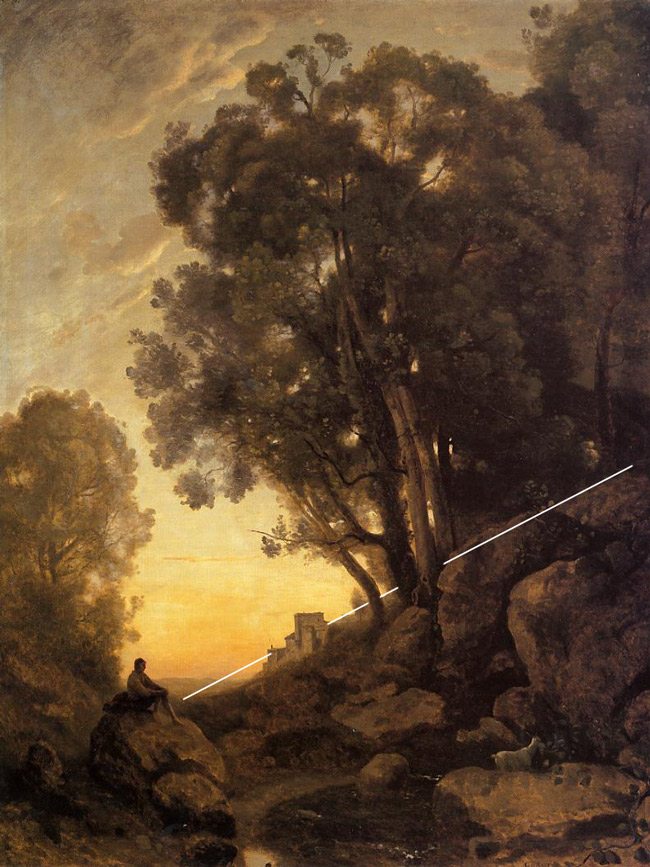
Now we can see a line of continuity which Corot uses to direct the eyes to the subject.
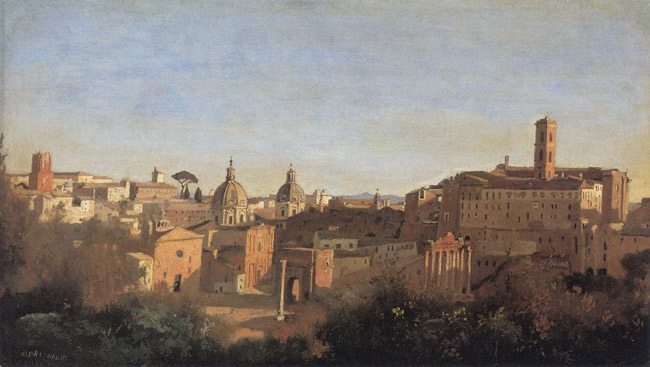
Earth, water, and sky are naturally seen with the peripherals. We’ve been seeing these elements our whole life, so we can naturally assume that they are true to their nature without focusing on it. We know the sky is above, and the water and earth are below. If we add some interesting design within these elements, then they will be more intriguing to view. The examples above demonstrated this effectively. Yet, below we see another Corot in which the sky and ground are not designed. Without knowing anything about design you would be able to “feel” the difference between this painting and any other on this post. He doesn’t design it the same. Maybe he wants it to feel stiff and stagnant. But this is what I’m referring to…how quickly we process that which is sky and ground. Without design, it teeters on the fence of boring.
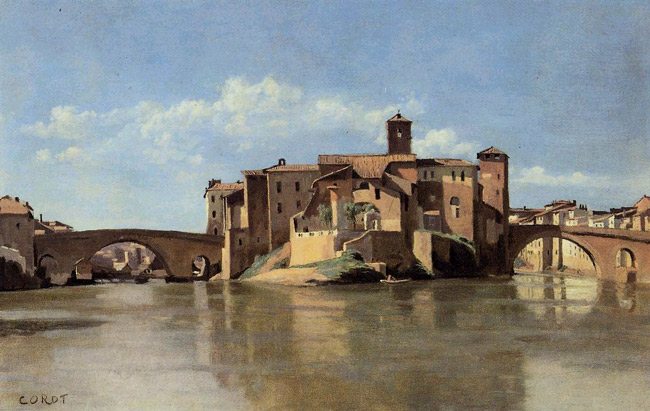
Now we can see a similar setting. This time with clouds and water. Can you see the difference? Do you feel your eyes moving around more? These are the design techniques you are enjoying without being aware of them.
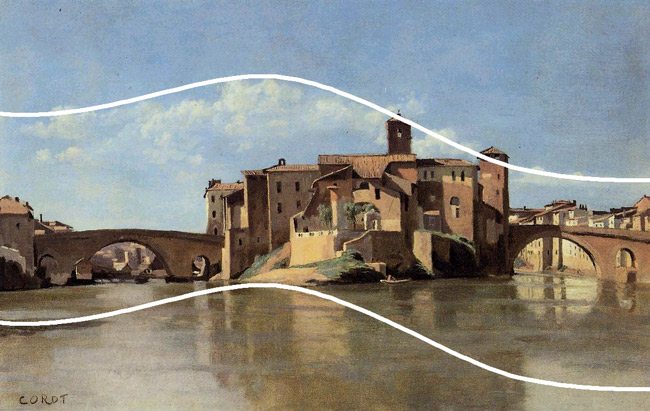
Now can you see this waving motion he hides in the clouds and the reflections of the water?
Can you feel the movement and interest in this one without looking below? Try to process it before moving on. Where are your eyes going?
Here we can see Corot’s ellipses in full effect. See how he’s tying in the clouds with the circular motion of the branches and ground shadows?
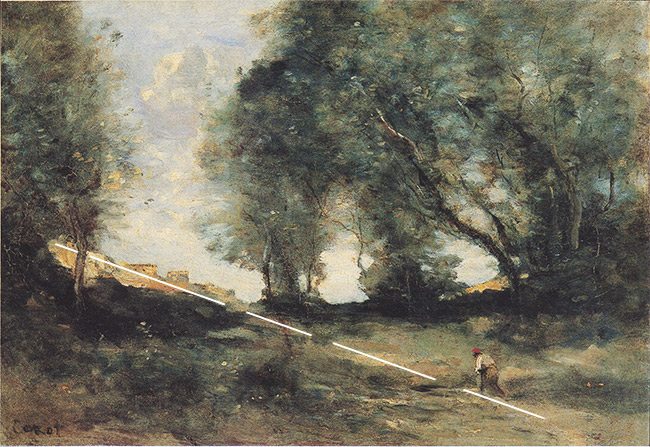
Here he has a line of continuity directing the viewers eye to the man.
Can you see the design elements in this one?
He effectively and subtly paints in circling branches to help the eye movement. Each corner is also circling to increase the movement.
And yet another, full of energy and movement to control the viewers eyes and keep them from being bored. You must hide these elements in the shadows, highlights, and shapes to be the most effective. Remember the Law of Continuity which means our eyes will connect the dots and follow the path of least resistance.
Now we can see how effectively he uses his ellipses to keep the eyes moving and connect the elements to create a fascinating design.
Thanks again for joining me with this article. Hope you are able to use these techniques in your own work. Take care!

 Now we can see a line of continuity which Corot uses to direct the eyes to the subject.
 Earth, water, and sky are naturally seen with the peripherals. We’ve been seeing these elements our whole life, so we can naturally assume that they are true to their nature without focusing on it. We know the sky is above, and the water and earth are below. If we add some interesting design within these elements, then they will be more intriguing to view. The examples above demonstrated this effectively. Yet, below we see another Corot in which the sky and ground are not designed. Without knowing anything about design you would be able to “feel” the difference between this painting and any other on this post. He doesn’t design it the same. Maybe he wants it to feel stiff and stagnant. But this is what I’m referring to…how quickly we process that which is sky and ground. Without design, it teeters on the fence of boring.
 Now we can see a similar setting. This time with clouds and water. Can you see the difference? Do you feel your eyes moving around more? These are the design techniques you are enjoying without being aware of them.
 Now can you see this waving motion he hides in the clouds and the reflections of the water?
 Can you feel the movement and interest in this one without looking below? Try to process it before moving on. Where are your eyes going?
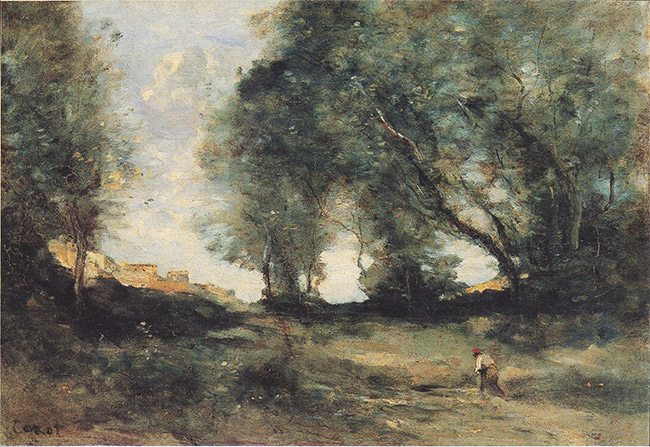 Here we can see Corot’s ellipses in full effect. See how he’s tying in the clouds with the circular motion of the branches and ground shadows?
 Here he has a line of continuity directing the viewers eye to the man.
 Can you see the design elements in this one?
 He effectively and subtly paints in circling branches to help the eye movement. Each corner is also circling to increase the movement.
 And yet another, full of energy and movement to control the viewers eyes and keep them from being bored. You must hide these elements in the shadows, highlights, and shapes to be the most effective. Remember the Law of Continuity which means our eyes will connect the dots and follow the path of least resistance.
 Now we can see how effectively he uses his ellipses to keep the eyes moving and connect the elements to create a fascinating design.
 Thanks again for joining me with this article. Hope you are able to use these techniques in your own work. Take care!