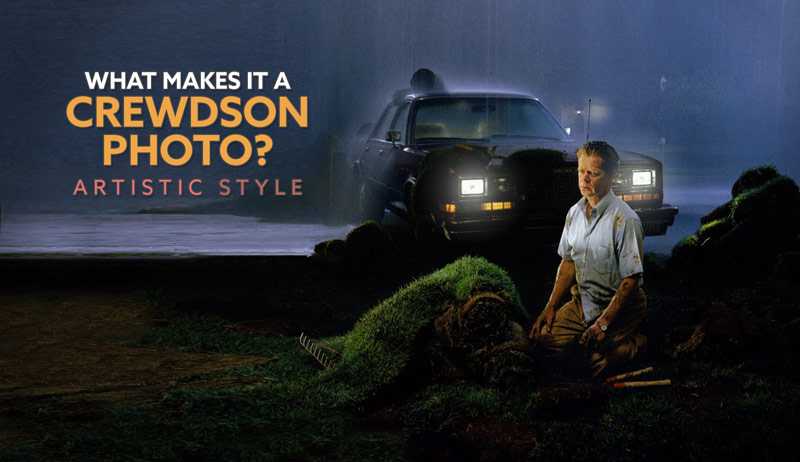
What Makes it a Crewdson Photo? (Artistic Style)
#695
Hey everyone, thanks for joining in for another great article!
Today we are going to dig into a ton of Gregory Crewdson photos to discover his artistic style. How are we able to easily identify one of his photos? What secret ingredients are being used to continually create remarkable imagery? Let’s find out now!
Gregory Crewdson Getting to Know
If you’re not familiar with Gregory Crewdson, you’re in for a real treat. Even if you know his work, it will be beneficial to understand his artistic style further. Do you remember how artistic style is developed? It’s a consistent use of subject matter, intent and finishing approach (see Day 122). We’ll see how these break down within the excellent images further below.
Here are some more articles and videos that will familiarize you with Gregory Crewdson. Now let’s start digging into his artistic style!
Gregory Crewdson – ANALYZED PHOTO #1
Gregory Crewdson – ANALYZED PHOTO #2
Gregory Crewdson – ANALYZED PHOTO #3
Gregory Crewdson – ANALYZED PHOTO #4

Crewdson's Secret Recipe Artistic Style
Ambiguous/Banal scenes
The first ingredient of Crewdson’s artistic style is the ambiguous (see #440) and banal qualities present in almost all of his photos. What are these people doing? Are they bored? There’s typically nothing going on within the photos, which means the viewer is able to create their own story.
Crewdson guides us up to a certain point, much like a parent would a child to a pool of water. But in most cases, we are pushed into the water and left to sink or swim. Gregory says, “here’s my photo, now you figure the rest out.” This seemingly boring approach turns into a quality because it’s consistently applied to his photos.
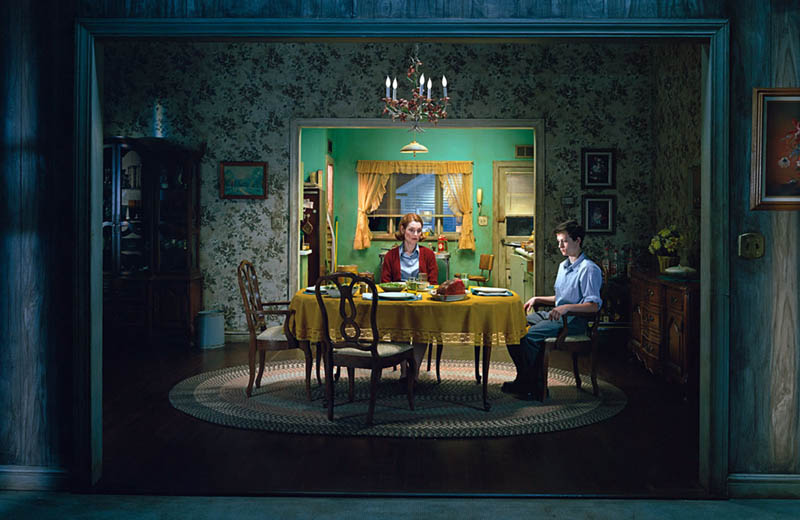
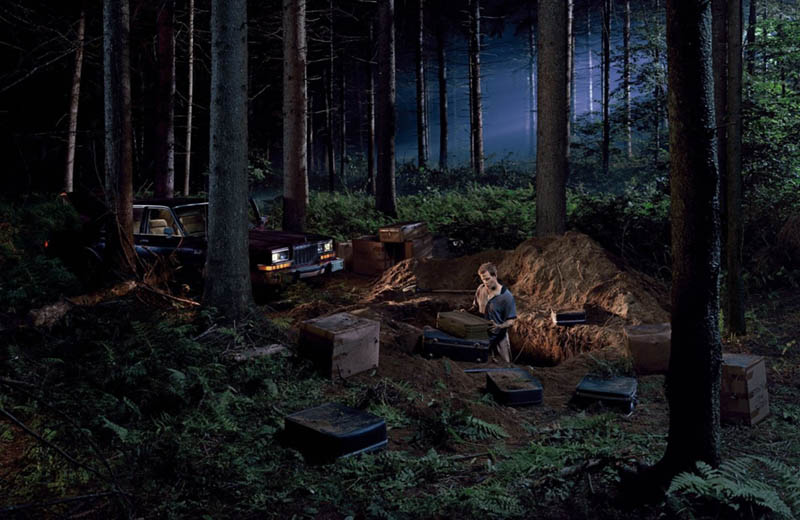
In this one, we see a man in a dark forest being lit by headlights and burying suitcases. Or is he digging them up? Crewdson wants us to make up our own story.
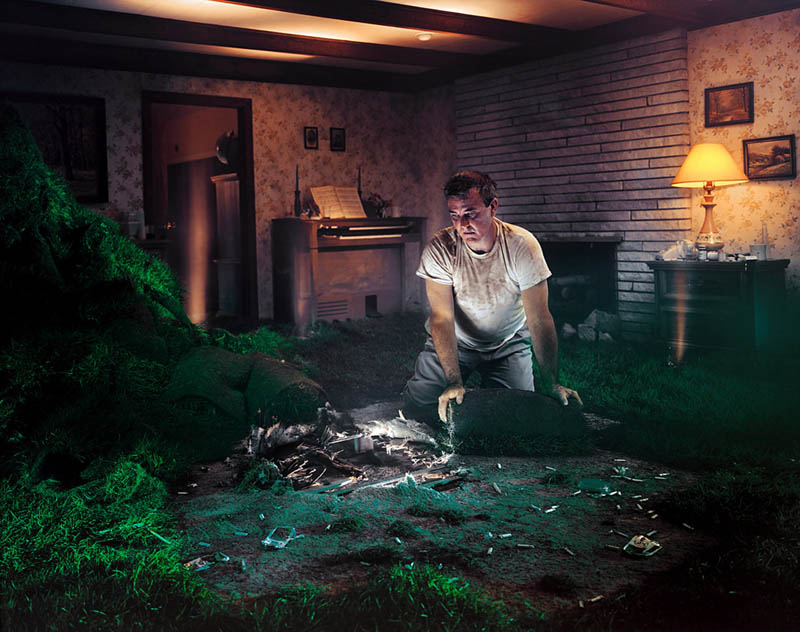
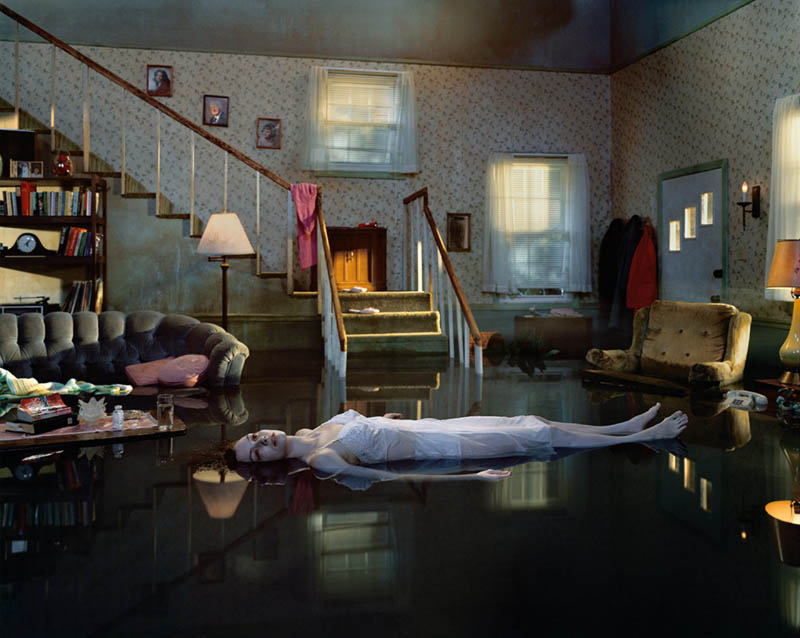
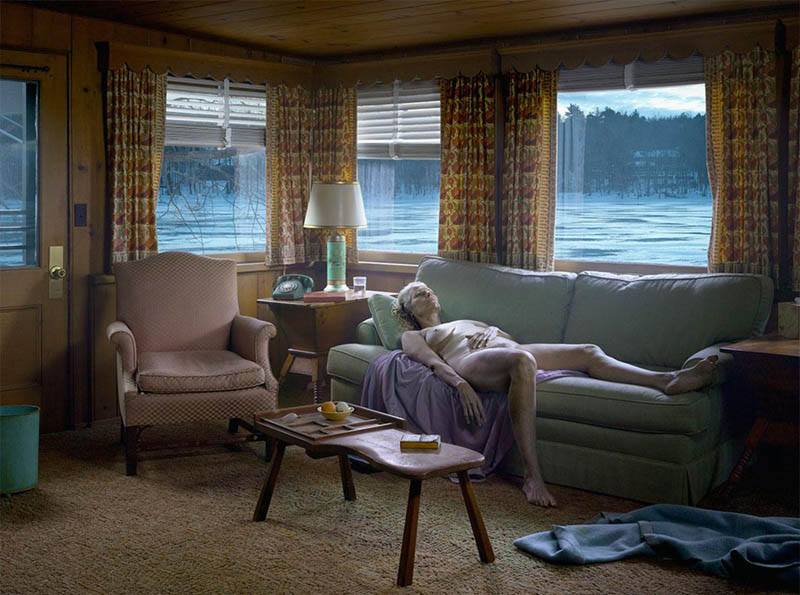
This is an excellent photo, but what happened here? Did her house get flooded and she decided to surrender to the sopping mess? Is she dead or alive?
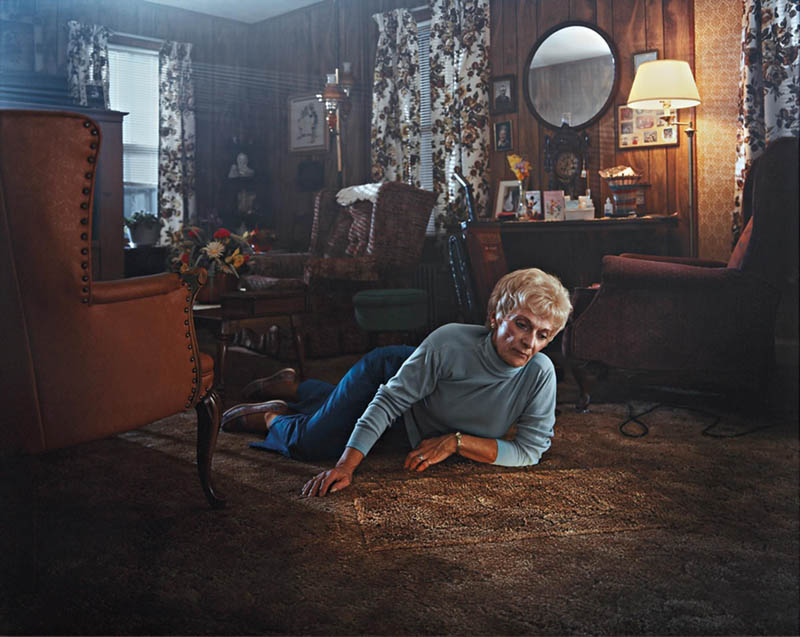
Is this lady working on a puzzle, or did she just fall to the floor?
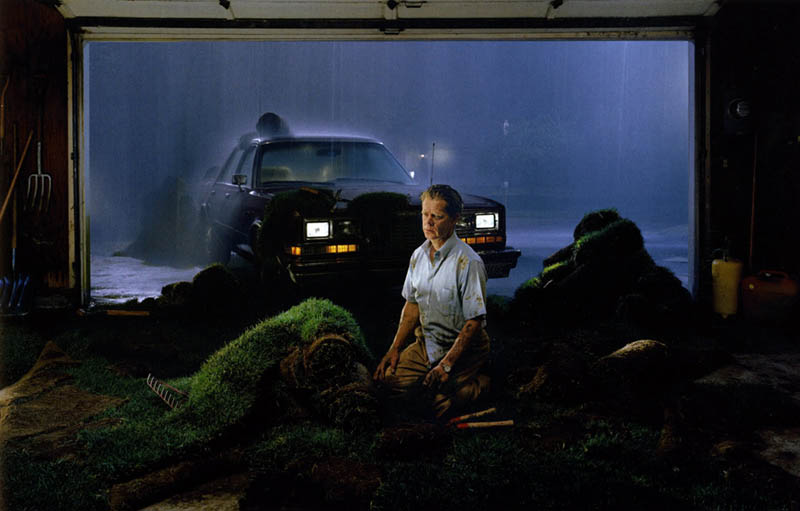
Blank stare
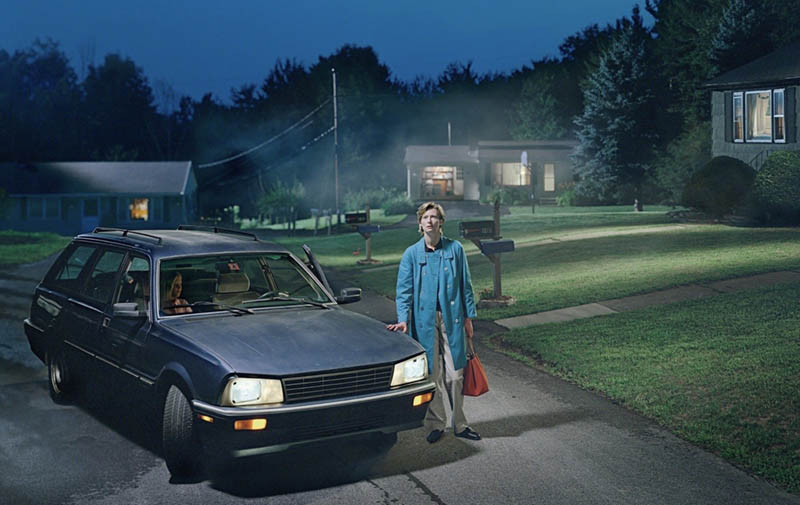
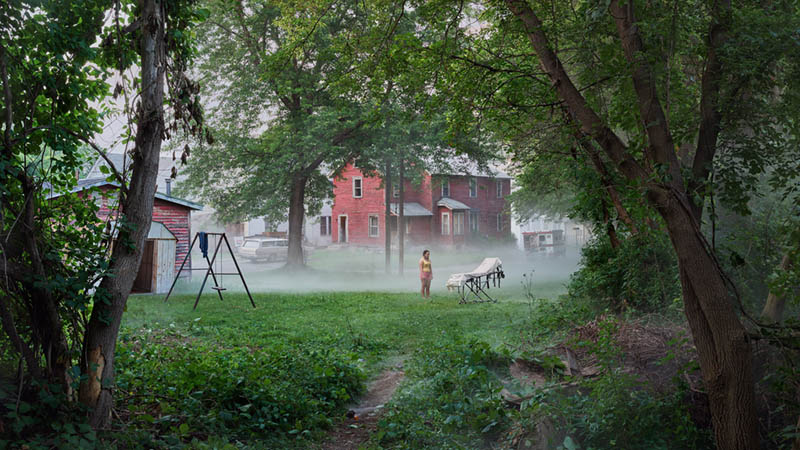
Another thing Gregory consistently captures in his photos is a blank stare within the character. What are they looking at? Are they sleepwalking? The characters aren’t striking a pose or looking pretty like we see in some Annie Leibovitz photos (see Structured Articles). They are blankly staring at nothing and wearing drab outfits that appear to be from a thrift store.
In this one, the woman is in a nightgown, but it’s daylight out. Her feet are all muddy and she’s got that blank stare. Did she just bury a body, or is she doing yard work?
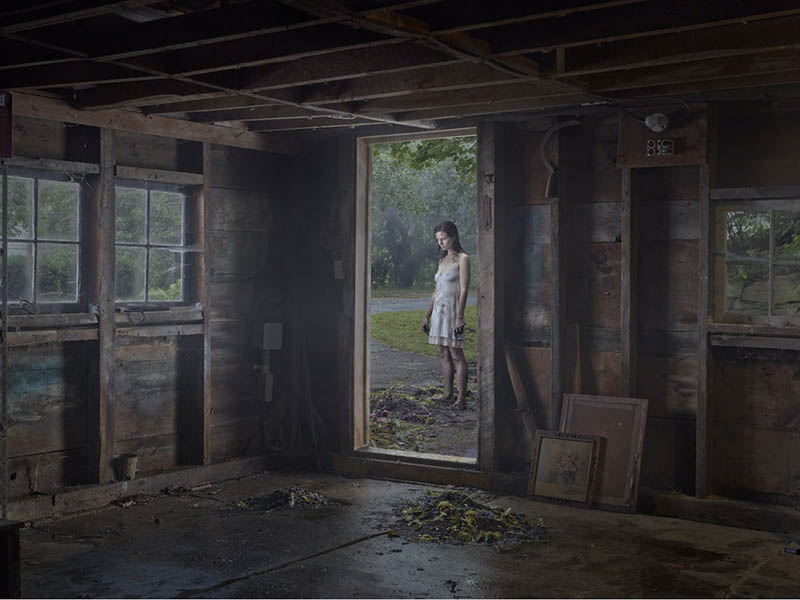
Such a simple thing to tell a model, “just stare into space, yes, good, I like that.”
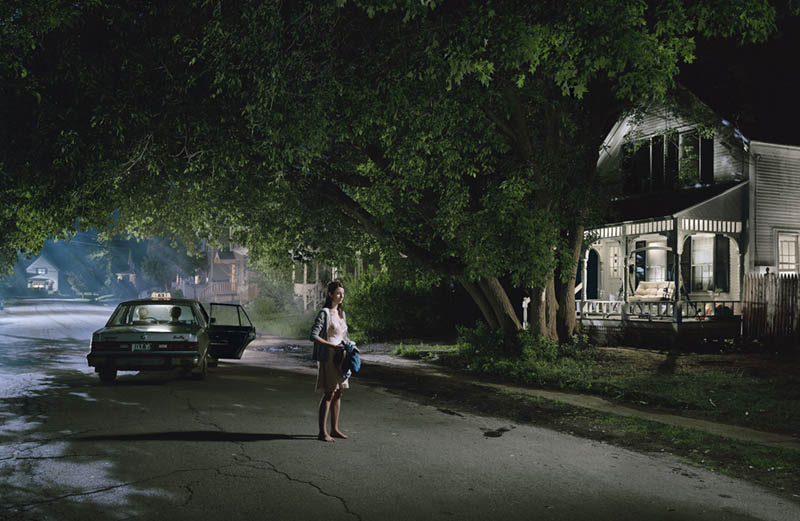
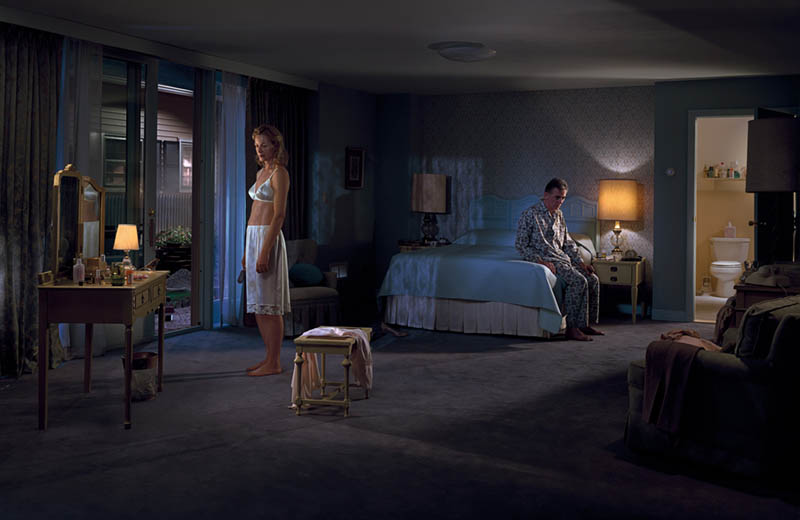
Are you starting to see the consistency? It works perfect!
Aerial Perspective and Mystery
Much like many movies, Gregory uses a smoke machine to create aerial perspective (see Day 42). This adds a sense of depth, but also mystery.
The smoke coming from the bus is on the sinister diagonal, much like the lower-right side of the road. This helps create more movement, rather than the smoke going to the right side of the frame.
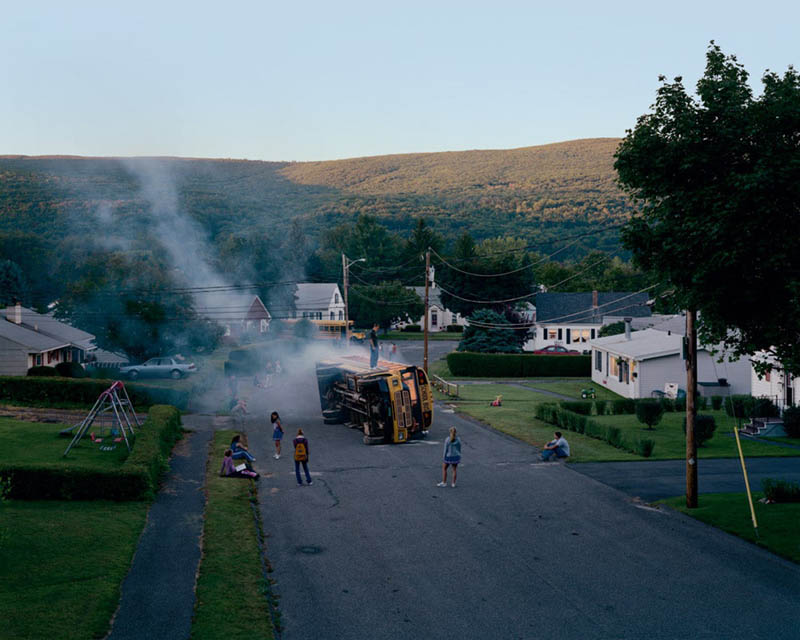
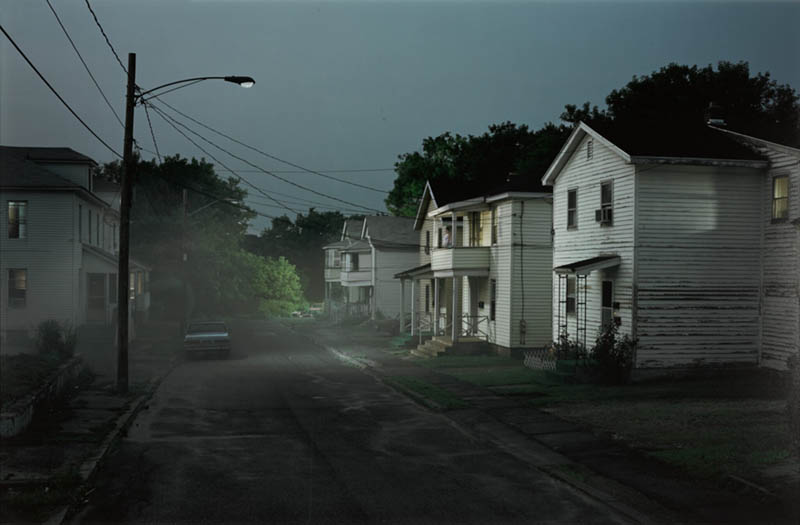
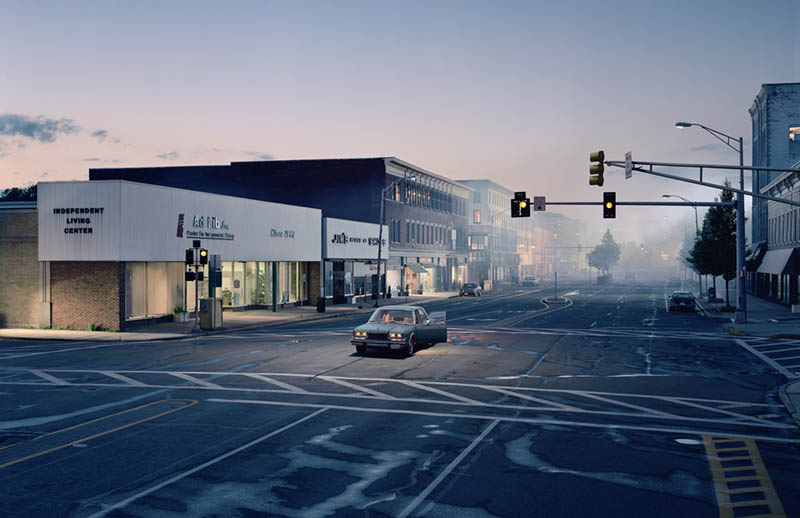
Nice depth and mystery in this one too. I wouldn’t go walking down this street at night!
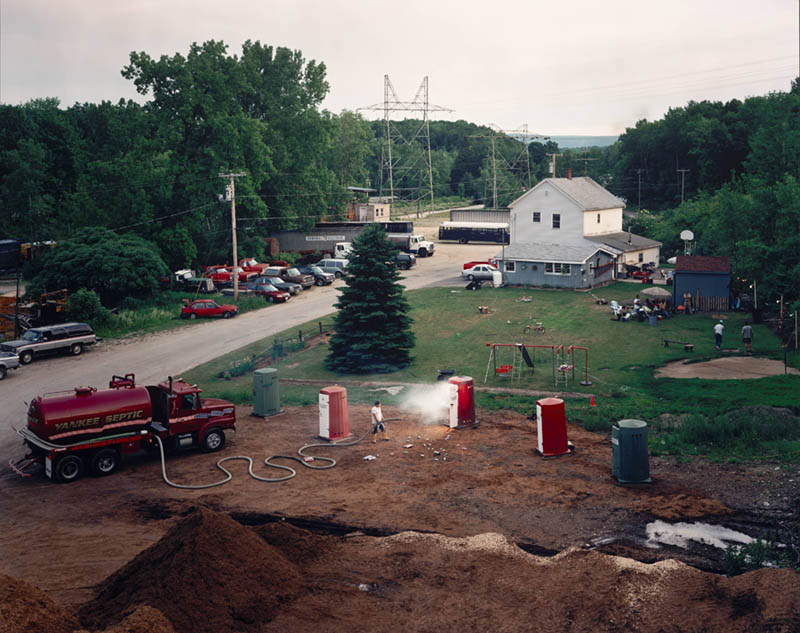
In this photo, he has the smoke coming out of an outhouse. What did that person eat??
Mirrors and Rooms
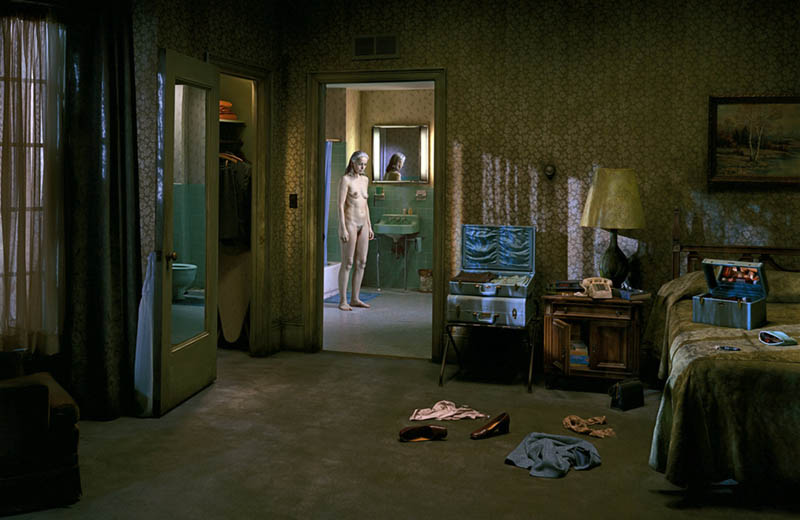
Another ingredient Gregory uses, which adds to the mystery and ambiguity of each scene, is mirrors. Can you see how each ingredient is compiling onto the other to carve out his artistic style? Very Cool!
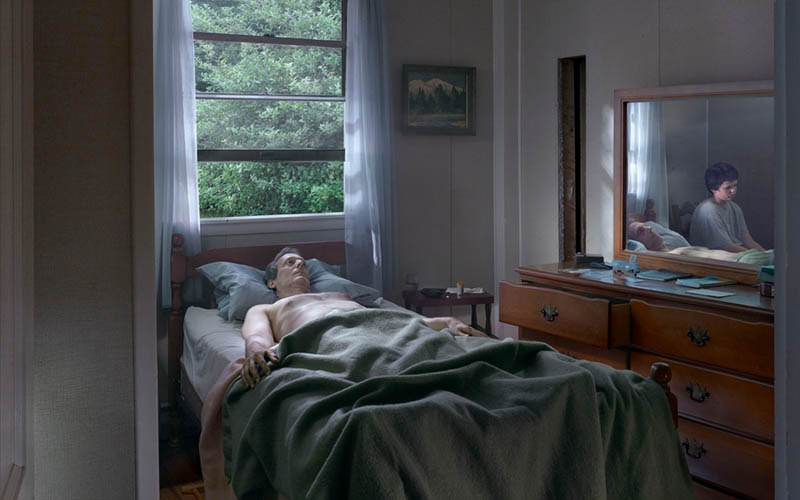
This one is creepy, and it’s very reminiscent of a scene in “The Shining” (see #677). The mirrors play a huge role in this!
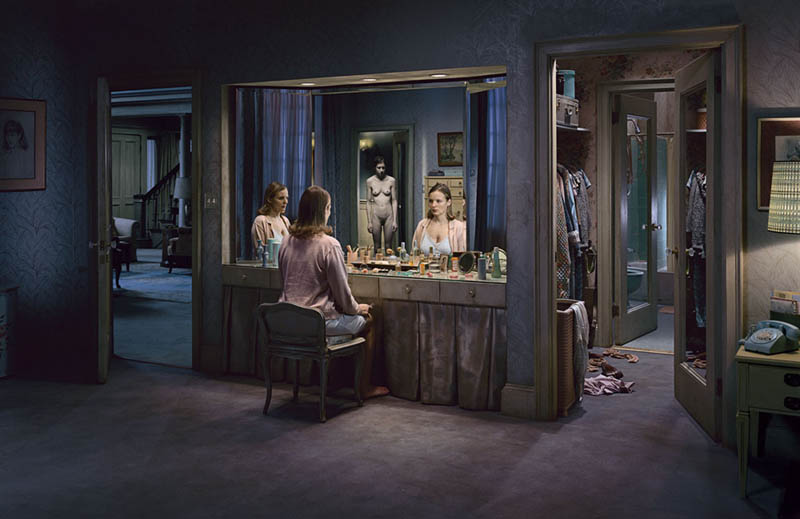
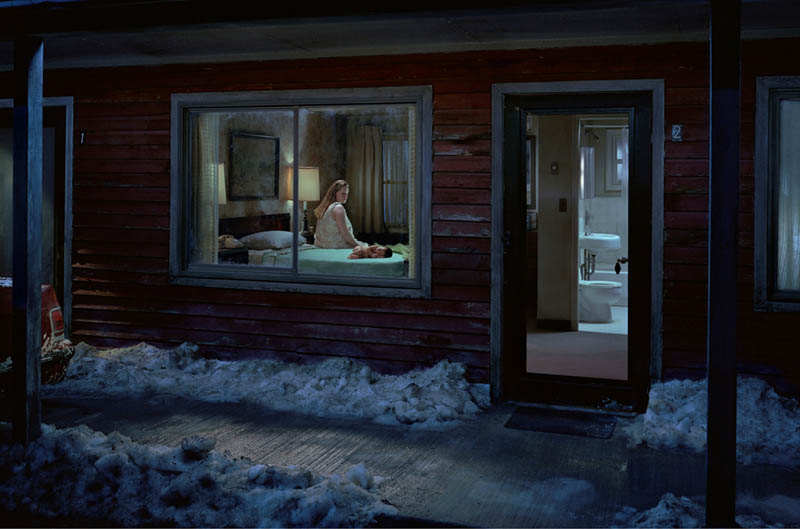
It looks like there are two mirrors in this one. The mirror on the right adds a lot of depth and mystery, almost like there is someone laying on the edge of the bed.
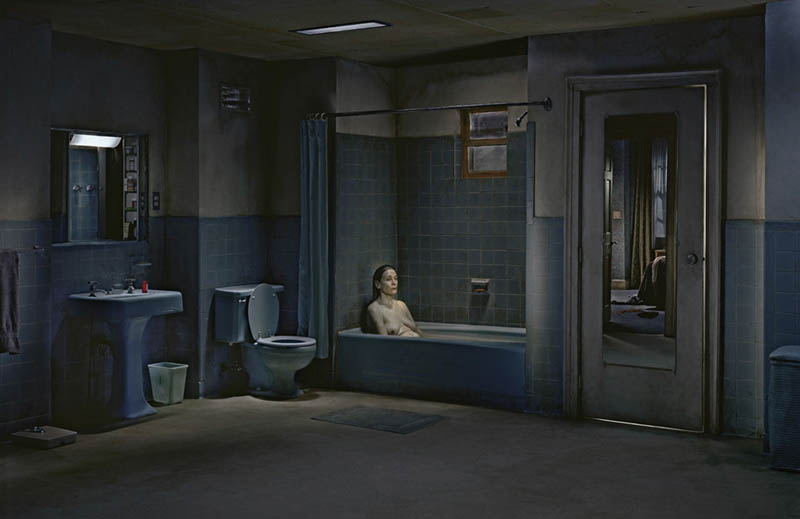
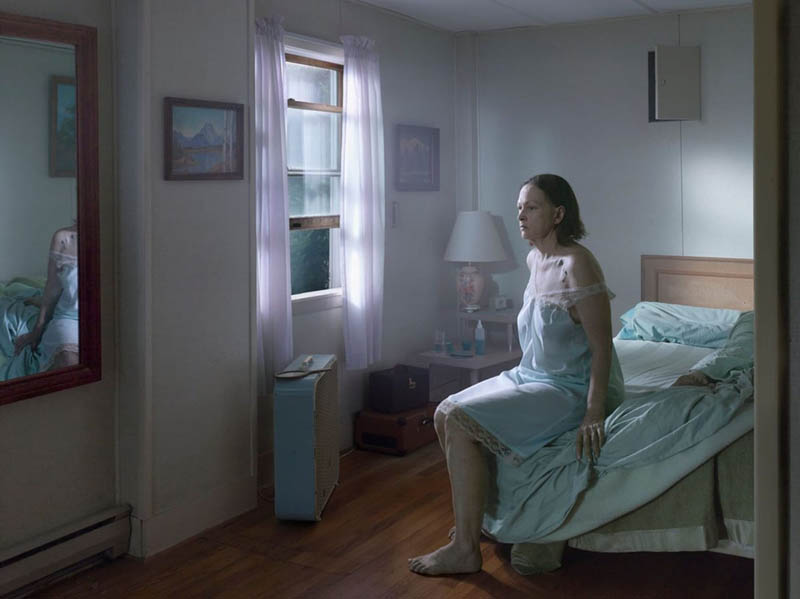
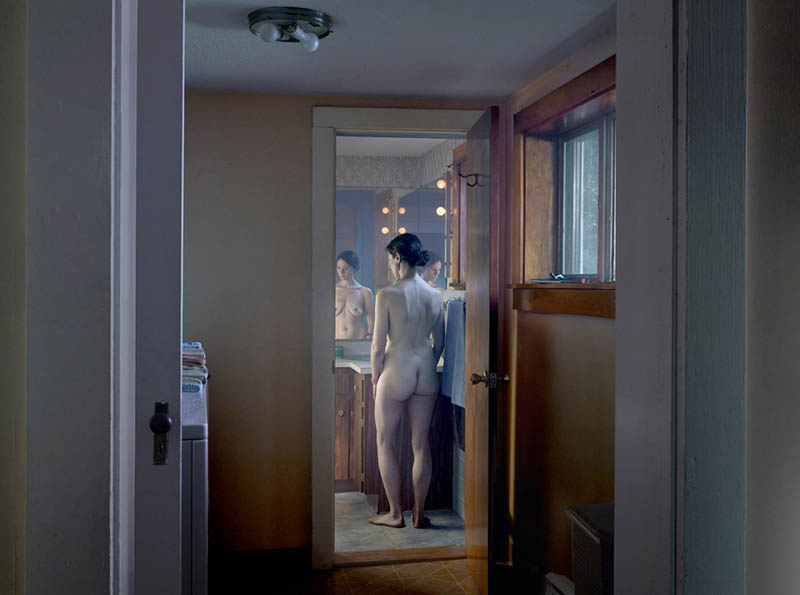
Do you see the mirror in this one?
Negative Space
Gregory also likes to use lots of negative space (see Day 83) to add to the banal quality. His mysterious characters are usually always a small part of the scene, while the environment consumes the majority of the image.
The environment is usually a small town with no commercial signs or contemporary houses. He also captures trailer parks and littered forest areas. All of this adds character to the environment and continues to force the viewer to fill in the blanks. Where is this, and what time period is Crewdson trying to present to us? The late 1970’s or 80’s?
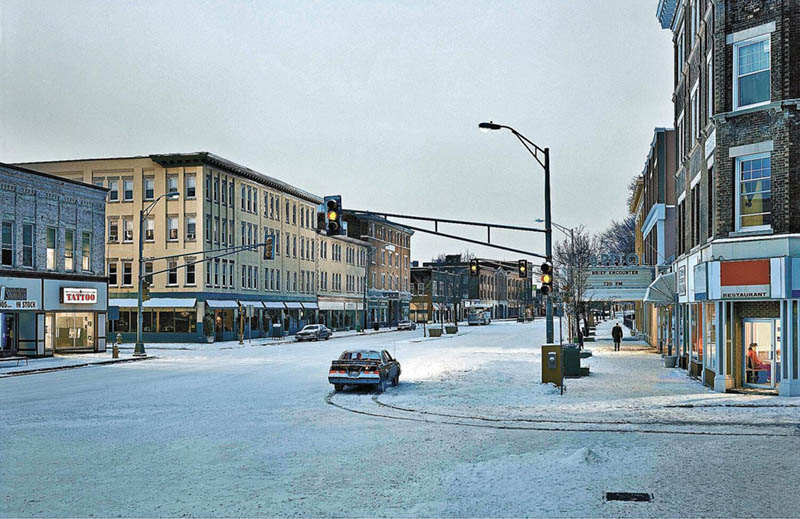
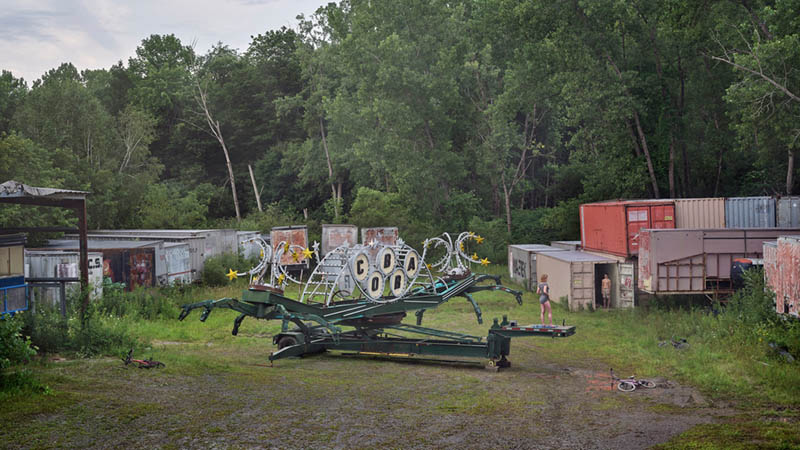
Notice the aerial perspective in this one too.
Small characters stand in a forest near the shipping containers. This is much like an establishing shot seen in a movie (see Day 267).
Windows
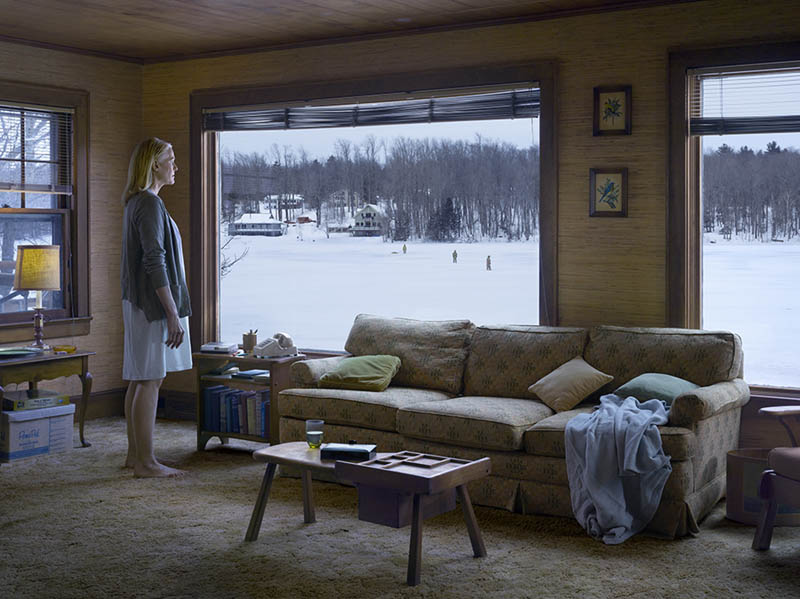
Gregory shoots within a lot of houses as well, but we’ll notice that most of them have a mirror or window present. They both add depth, but the window also creates a source of light. In some cases, it can even represent some kind of “translucent barrier” to another place in time. Or is that just me creating my own story, just as Gregory intended?
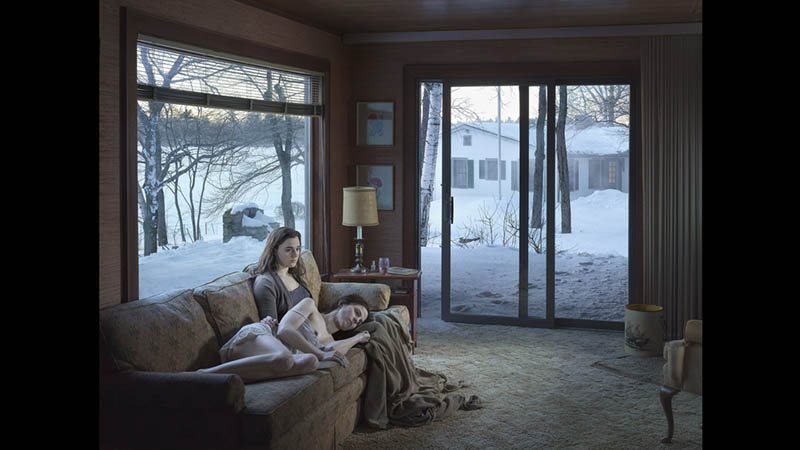
The women are half dressed for such freezing weather outside, and the sliding glass door is open. Crewdson also adds mystery to this scene by creating footprints leading out the door.
What is this lady cleaning? Is that blood in the sink? Who’s house is that outside the window?
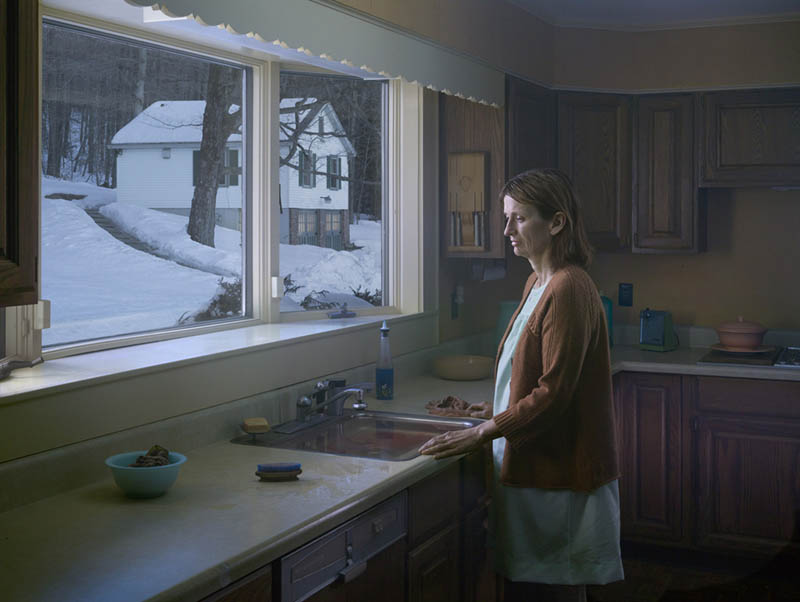
Great lighting, depth and mystery in this one!
Lighting
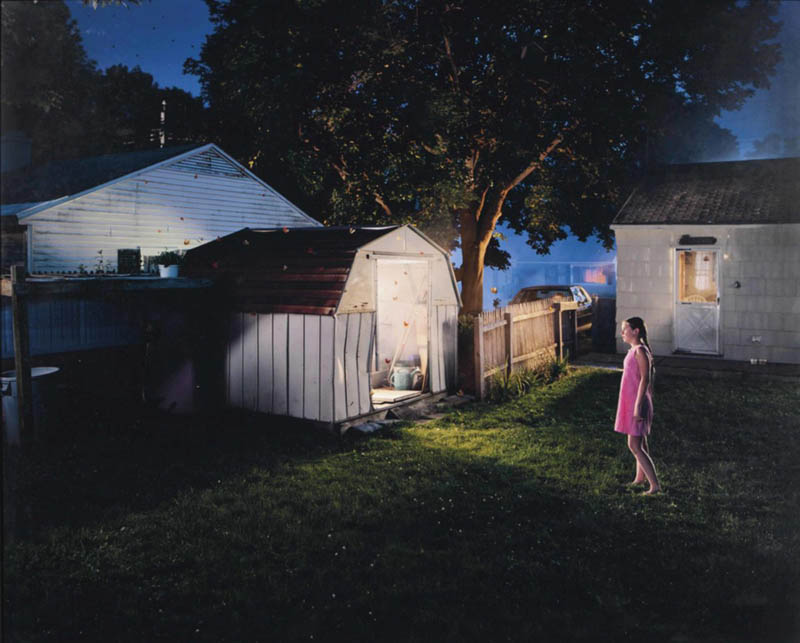
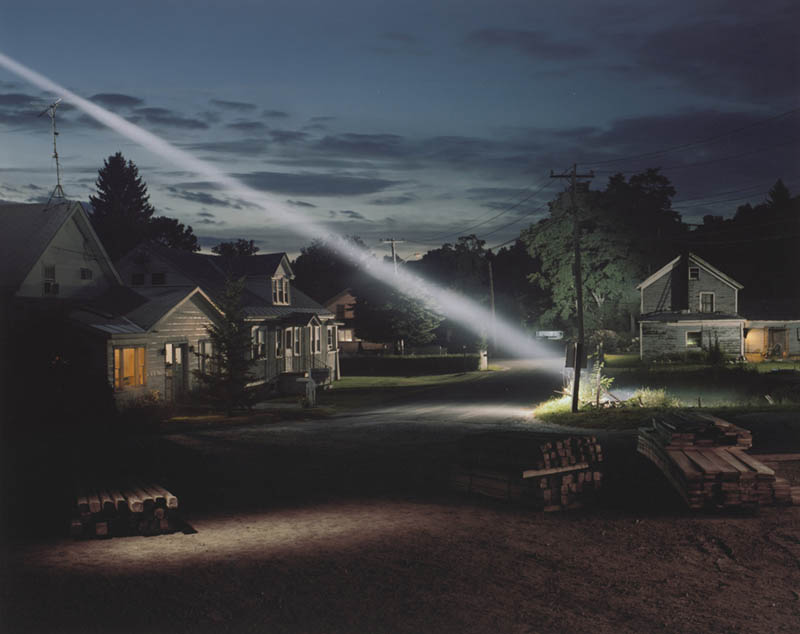
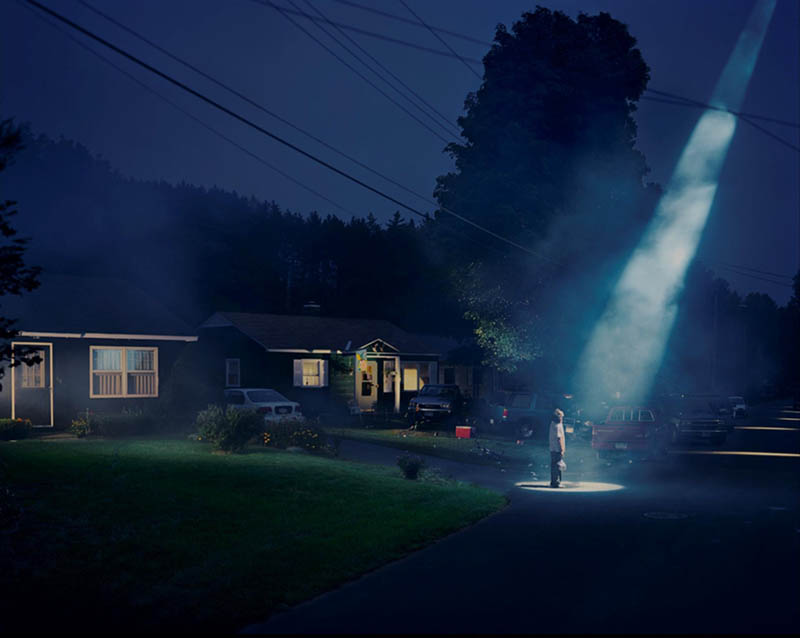
Gregory varies his artistic style for certain projects, and in these next photos we can see how he uses a spot light to add even more mystery. It almost gives us a supernatural feel? Are aliens invading this small town and abducting all of the bored people?
He also uses lighting in unique ways like the headlights of cars, or the blue glow of a TV screen.
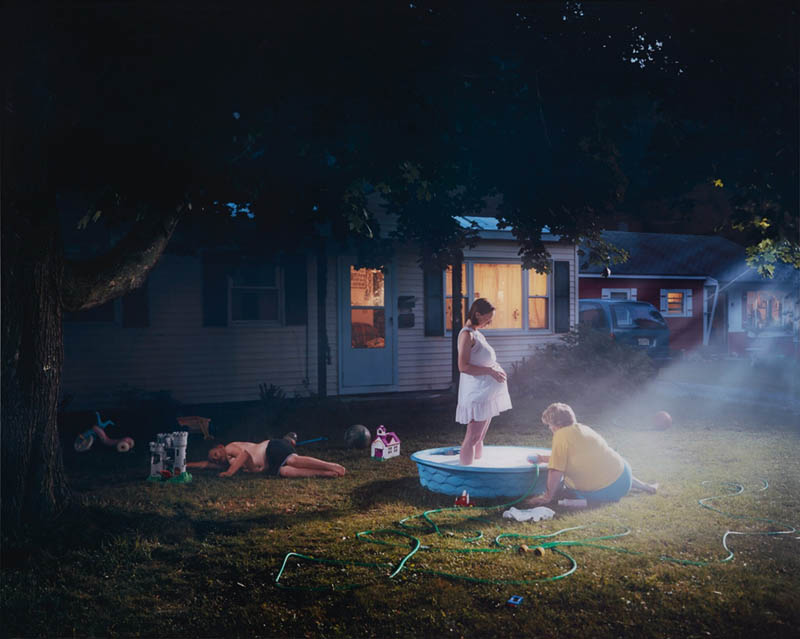
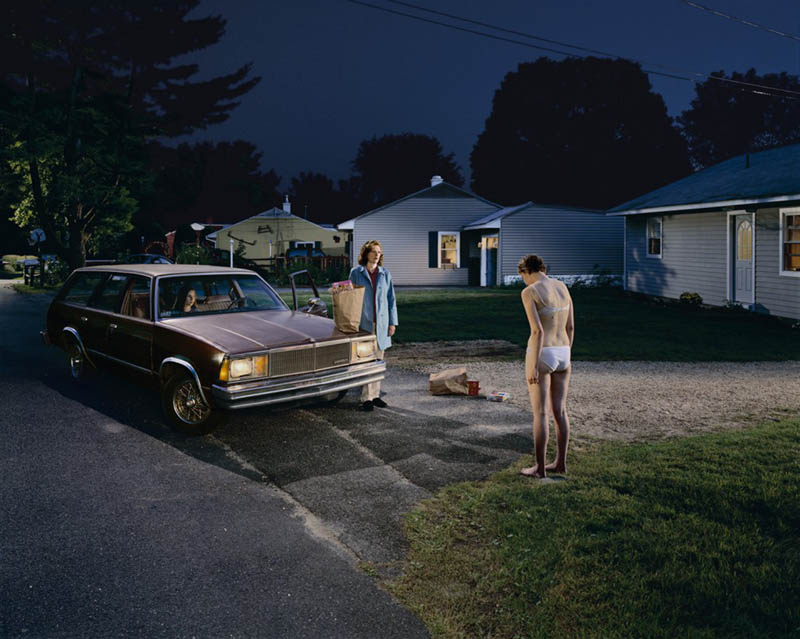
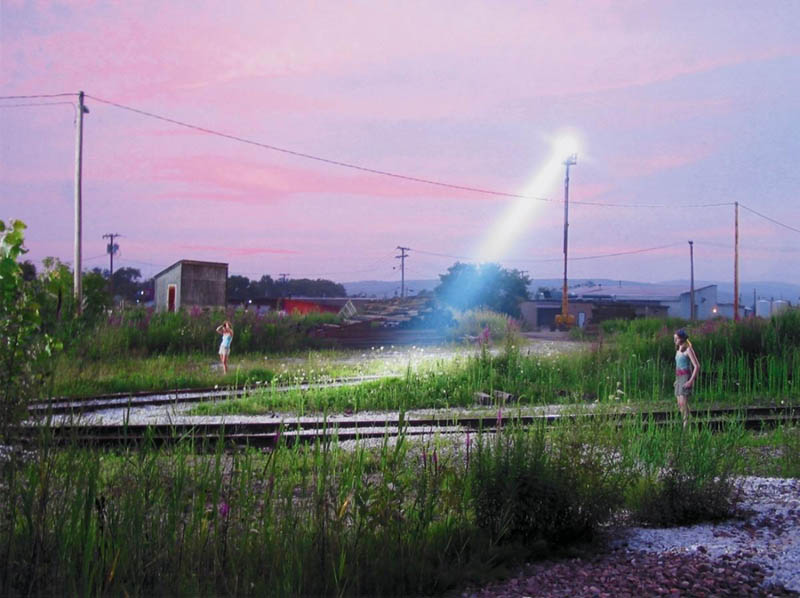 Can you see the spot light coming in from the right side? It’s shining towards the puddle with balloons, and the car with the open door.
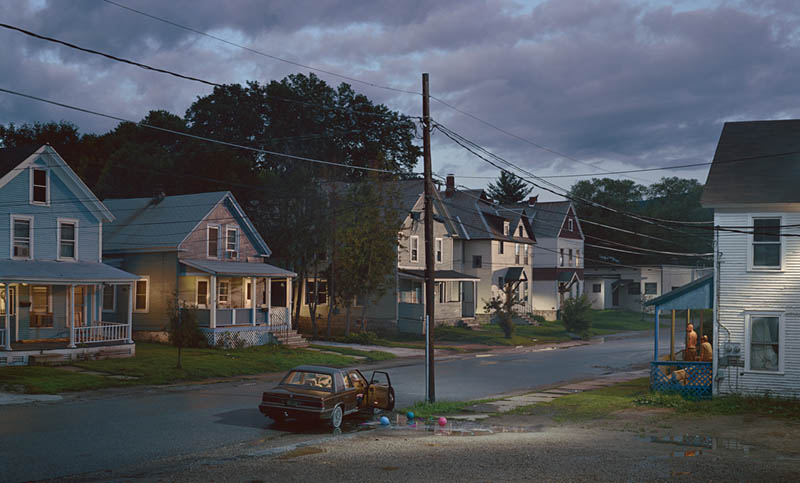
There’s definitely aliens invading in this one!
Wet Streets and Older Props (cars/outfits)
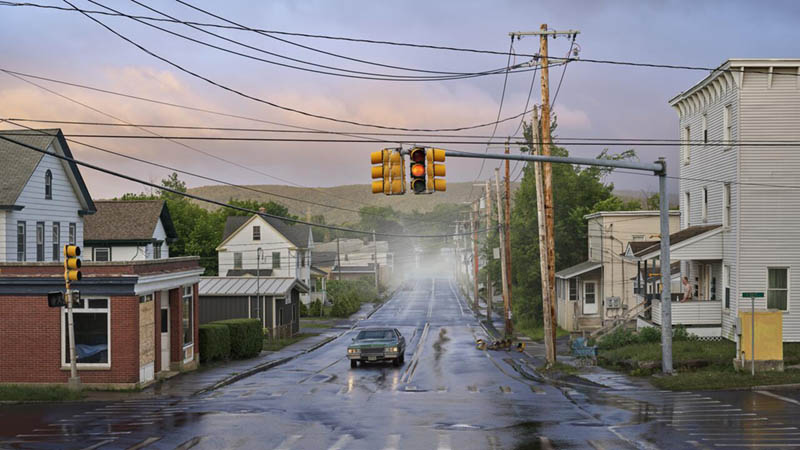
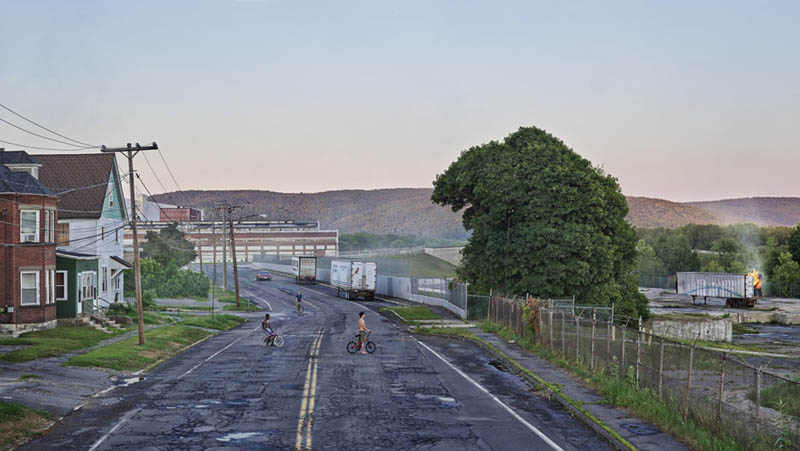
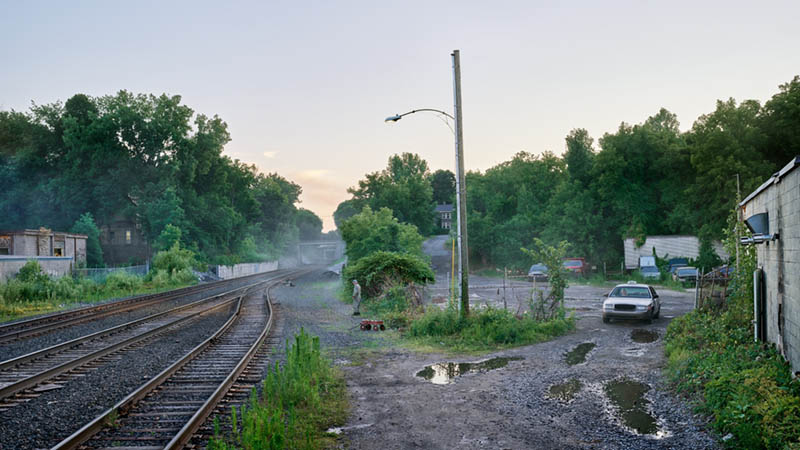
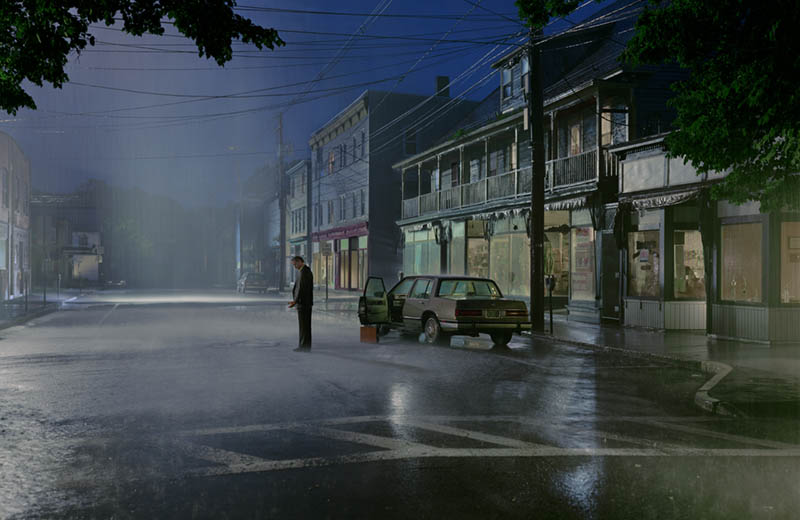
Gregory took another concept from cinematography and sprayed the streets with water. This technique is used consistently throughout many of his photos, so it’s definitely an element that adds to his artistic style.
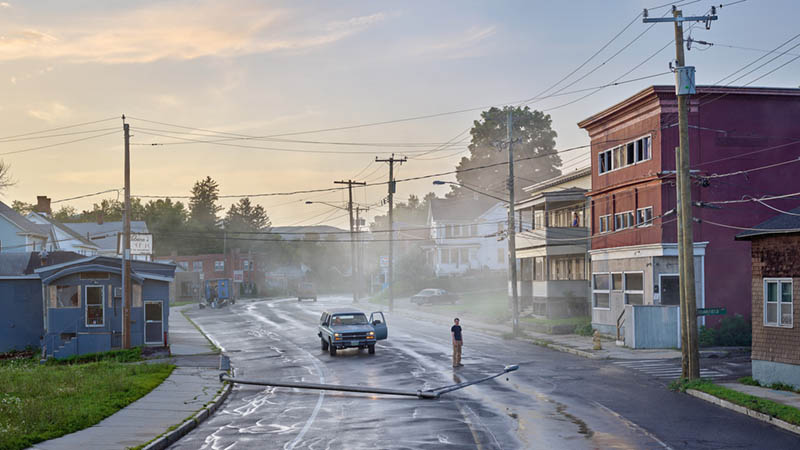
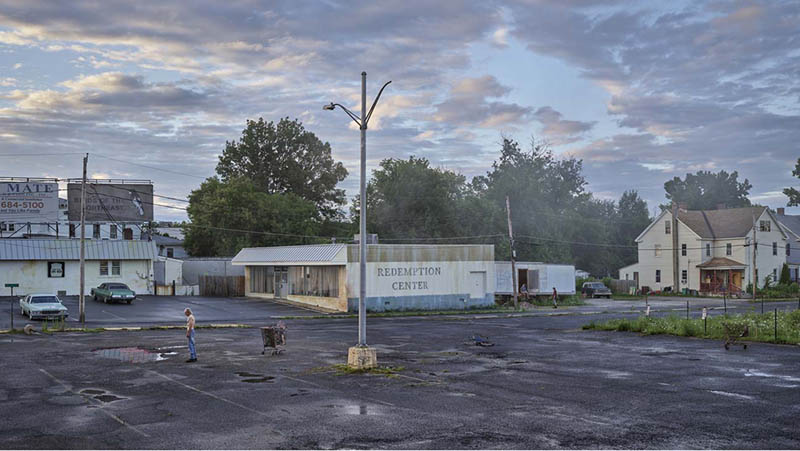
The wet streets allow light to reflect off of the water, but it also creates an effect like it rained. When the smoke machine is used to create aerial perspective and it’s combined with wet streets, we get this “fresh rain” look that adds a lot to the aesthetics he’s creating for us.
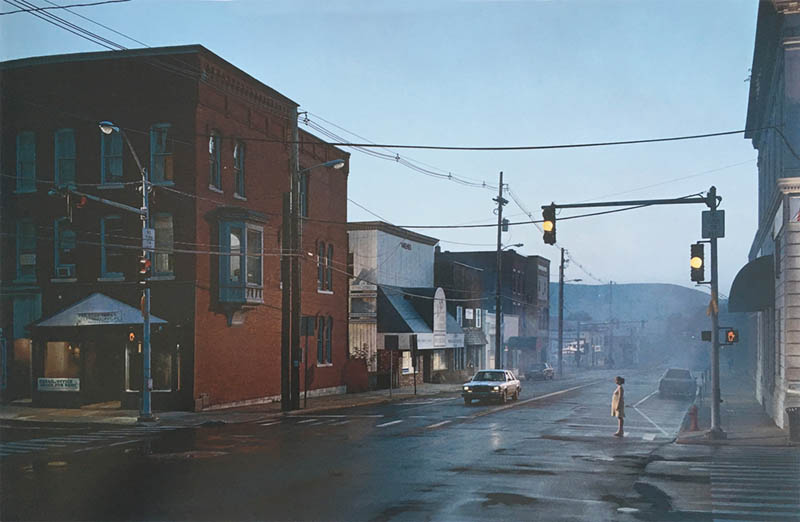
Counterpart
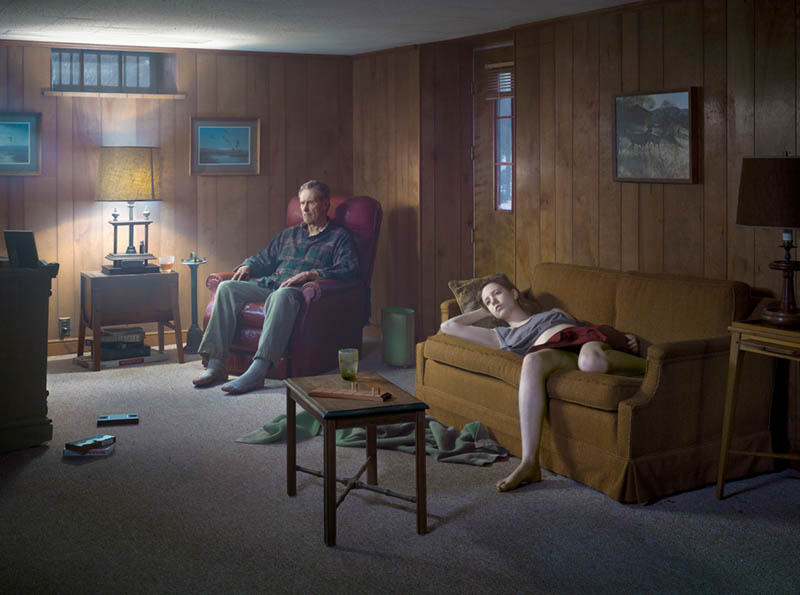
Another technique Crewdson likes to use is the counterpart (see Day 57), which has to do with the balance. This usually requires two characters or points of interest that are placed on the left and right of the vertical centerline.
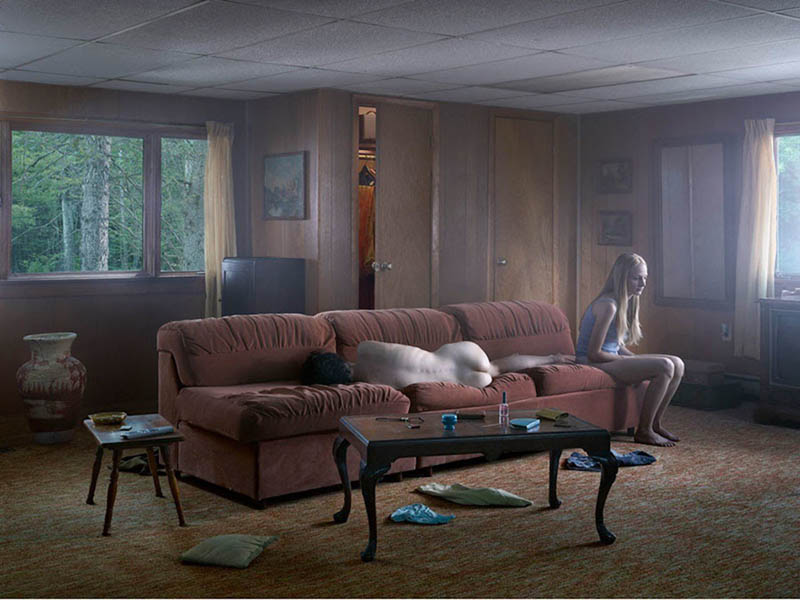
In this next photo, we can see how he has the old man on the left, and the woman on the right. The wall in the background creates a strong vertical in-between them as well. Notice how this vertical edge also coincides (see Day 48) with the edge of the couch and leg of the coffee table. Is Crewdson suggesting that the marriage isn’t going so well?
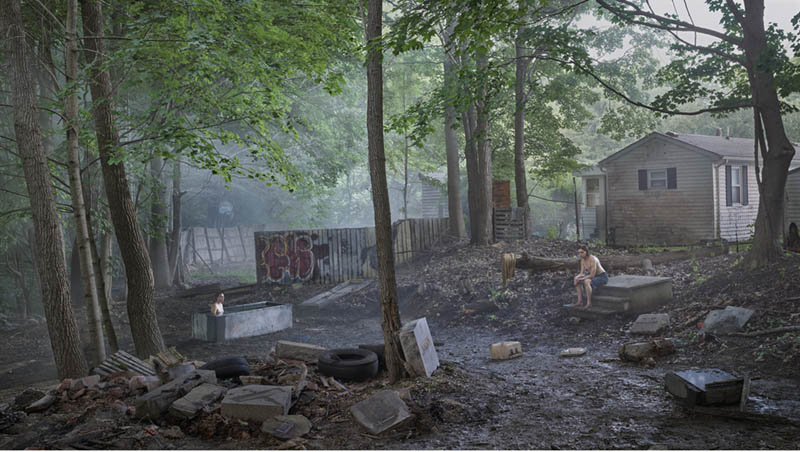
Same thing here. We have a strong vertical in the center, which is in-between the woman and man. In the Composition & Design Drawing Course I discuss how the space between the snail and ladybug should be free of anything, in order to clearly unify them by their gazing direction (see Day 99). But in this case, Crewdson is purposely separating the characters with a strong vertical.
In this photo, the man is in the middle, but the woman is balanced by the lamp on the left.
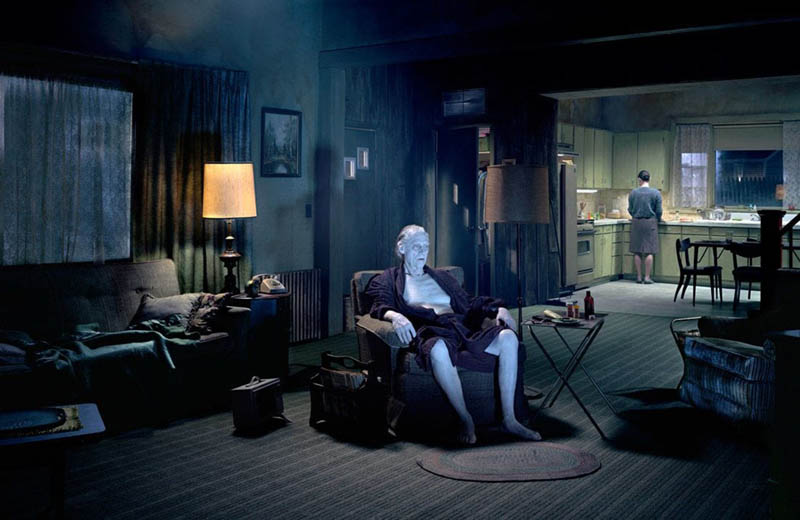
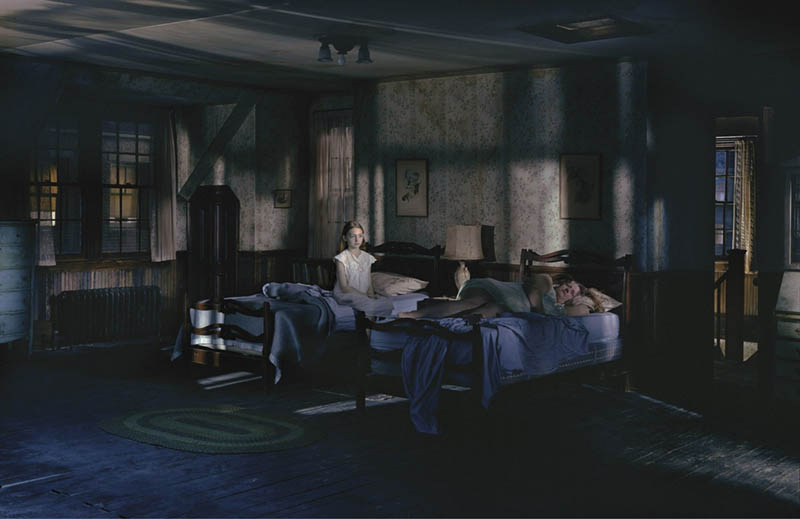
It may be hard to see, but there is a woman sleeping on the right side near this girl.
Conclusion
Were you inspired by Gregory Crewdson and the secret ingredients of his artistic style? Try to take a deep look at your own photos or paintings and see if you have your own artistic style developing. Consistency is key, so it doesn’t matter what you choose to incorporate into your art. Gregory chose boring scenes and people, and look where he is today.
Thanks so much for being a master pass member, you are much appreciated! See you in the next one!